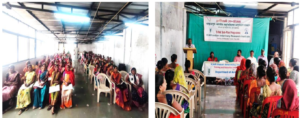
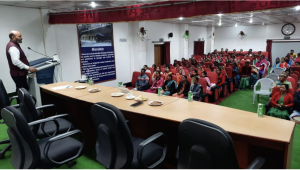
ICAR-Indian Veterinary Research Institute (IVRI), Izatnagar, successfully organized a national interface meeting in hybrid mode with ATARIs and KVKs from Zones VIII (Pune), IX (Jabalpur), X (Hyderabad), and XI (Bengaluru), covering twelve states across the country which is the third meet in ATARI-KVK Interface meeting. The event was held in alignment with the national vision of Viksit Bharat @2047, bringing together over 271 participants, including senior officials, scientists, and field-level experts. The inaugural session was graced by Dr. Rajbir Singh, Hon’ble DDG (Agricultural Extension), ICAR, as Chief Guest and presided over by Dr. Triveni Dutt, Director-cum-Vice-Chancellor, IVRI. Directors of ATARIs—Dr. S.K. Roy (Pune), Dr. S.R.K. Singh (Jabalpur), Dr. Sheikh N. Meera (Hyderabad), and Dr. V. Venkatasubramanian (Bengaluru)—were present, along with senior IVRI officials including Joint Directors and Heads of Regional Centres. A large number of KVK representatives, including Heads and SMS (Animal Science) from 287 KVKs across the four zones, actively participated in the discussion.
The meeting commenced with a welcome address by Dr. Rupasi Tiwari, Joint Director (Extension Education), IVRI, who provided an overview of the participants and set the context for the discussions. Participants from various zones put forth their expectations from IVRI, seeking technical support in areas such as On-Farm Trials (OFT), Front Line Demonstrations (FLD), and dissemination of adoptable livestock technologies with supporting SOPs and POPs. There was a strong demand for hands-on training for KVK staff, veterinarians, and livestock farmers, veterinary inputs like vaccines, dewormers, mineral mixtures, and diagnostic tools, along with enhanced research-extension linkages and documentation support. Participants also stressed the need for interventions in feed and fodder technologies, including low-cost rations, silage, TMR, bypass nutrients, and mineral mixtures. The interface served as a significant platform for aligning field-level livestock development efforts with IVRI’s research capabilities to realize the goals of Viksit Bharat @2047.
Dr. Triveni Dutt, Director-cum-Vice-Chancellor of IVRI, highlighted the institute’s key contributions to livestock health and production, detailing the extensive facilities and services supporting the nation’s livestock. He stressed the importance of feedback from ATARIs and KVKs to help prioritize research aligned with farmers’ needs. Dr. Dutt also spoke about IVRI’s educational initiatives, including vocational courses, certificates, and postgraduate diplomas for continuing veterinary education, which are valuable resources for Subject Matter Specialists in animal husbandry. He emphasized strengthening communication between scientists and farmers for effective technology dissemination and acknowledged the crucial role of the extension system. The collaboration with ATARIs and KVKs has been vital in identifying research priorities, with this meeting being the third in the series, building on strategic documents developed earlier.
Dr. Rajbir Singh, Deputy Director General (Agricultural Extension), ICAR, underscored the vital role of ATARIs and KVKs in nation building and praised IVRI’s effort in creating a common platform for knowledge sharing and technology transfer. He highlighted the central role of KVKs in technology assessment and demonstration and called for regular interface meetings to aid future livestock sector planning. Dr. Singh proposed developing “islands of excellence” through the KVK network and stressed stronger collaboration between IVRI, the Ministry of Fisheries, Animal Husbandry and Dairying, and continuous communication among key stakeholders. He advocated for sharing IVRI’s literature with KVK personnel to facilitate its translation into vernacular languages, making it more accessible to farmers across the country. He also highlighted the importance of documenting both success and failure stories to guide future initiatives. Additionally, he emphasized the need to promote climate literacy, reach unreached farmers through feed and fodder production and entrepreneurship programs, and raise awareness about advanced technologies such as sex-sorted semen and methane mitigation strategies for sustainable livestock farming.
In the technical session I, Dr. Bablu Kumar, In-Charge, ITMU, presented an overview of IVRI’s Intellectual Property (IP) portfolio. Dr. Brijesh Kumar shared the scientific package of practices developed by the institute for improving reproductive health management in livestock. Dr. L.C. Chaudhary presented the Package of Practices (PoP) related to balanced diet formulation and nutritional requirements of livestock, while Dr. Anuj Chauhan provided insights into effective livestock management strategies.
Technical Session II featured addresses by the Directors of ICAR-ATARIs from Pune, Jabalpur, Hyderabad, and Bengaluru. They shared valuable insights and expressed their keen interest in collaborating with the institute. This was followed by an engaging interactive session, during which Subject Matter Specialists, KVK personnel, and ATARI scientists raised various queries. Experts from ICAR-IVRI responded to the questions, facilitating meaningful discussions.Participants expressed their appreciation to the organizers for arranging such an informative and impactful session. The session highlighted key thematic areas requiring immediate attention and action. In Feed & Fodder Management, there was strong emphasis on developing and distributing area-specific mineral mixtures, small-scale silage units, feed block/TMR machines, and tools like least-cost ration formulation software and dry matter calculators, especially for saline or waterlogged areas. Under Animal Health & Disease Management, participants stressed the need for tick-resistant alternatives, vaccines for LSD, blue tongue, mastitis, and affordable diagnostic kits. Animal Breeding & Reproduction discussions focused on making sex-sorted semen more affordable, supplying pure goat breeds, and providing tools for buck selection and infertility management in Gir cows. In Wildlife & Stray Animal Management, the need for solutions to control monkey menace, wild pigs, stray cattle/dogs, and castration of wild animals was raised. Entrepreneurship & Rural Technology saw demand for pellet machines, solar hatcheries, livestock training programs, and equipment for fracture fixation and reducing drudgery in donkeys. Emphasis on Climate Resilience included methane mitigation and climate-smart fodder along with climate literacy. The programme concluded with closing remarks by Dr. Triveni Dutt, Director of ICAR-IVRI, followed by a vote of thanks delivered by Dr. Bablu Kumar, Principal Scientist, Division of Biological Products.
https://www.ivri.nic.in/News/News%20Interface%20ATARI%20KVK%20IVRI%20site.pdf